



17.12.2024.
The Agroforestry Project at Silveira Has Begun!

Intro
We’re thrilled to announce the launch of our Syntropic Agroforestry Project, combining sustainable agriculture with environmental regeneration. This marks the second major endeavor by our Regen_Team, building on the success of the R1 regeneration zone.
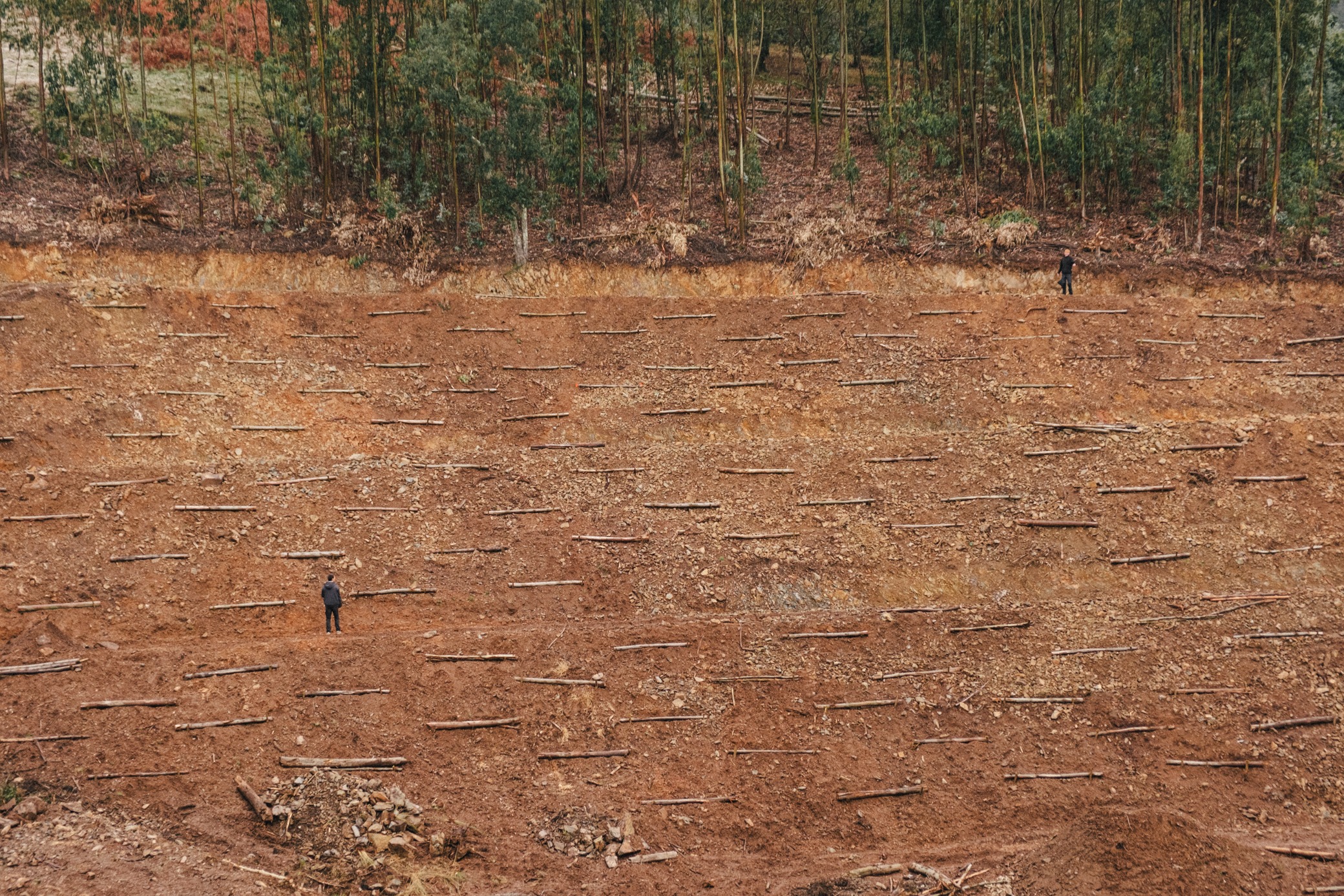
The agroforestry area was once a vibrant terraced landscape, supporting diverse agricultural activities nourished by natural irrigation. However, the abandonment of the village of Silveira de Baixo led to the rise of a eucalyptus monoculture, resulting in soil degradation and water erosion.
A partially built dam in the area, left incomplete by the previous landowner, is now being reconstructed to serve as a vital water storage facility for irrigating the agroforest and sustaining the village.
Our Syntropic Agroforestry System will restore the land, blending ecological regeneration with agricultural productivity. This approach promotes biodiversity, soil fertility, and climate resilience while phasing out monoculture.
From Monoculture to Diversity
The agroforestry area was once a vibrant terraced landscape, supporting diverse agricultural activities nourished by natural irrigation. However, the abandonment of the village of Silveira de Baixo led to the rise of a eucalyptus monoculture, resulting in soil degradation and water erosion.
A partially built dam in the area, left incomplete by the previous landowner, is now being reconstructed to serve as a vital water storage facility for irrigating the agroforest and sustaining the village.
Our Syntropic Agroforestry System will restore the land, blending ecological regeneration with agricultural productivity. This approach promotes biodiversity, soil fertility, and climate resilience while phasing out monoculture.
What Is Syntropic Agroforestry?
Pioneered by Ernst Götsch, Syntropic Agroforestry mimics natural forests, working with nature rather than against it. Its core principles include:
- Maximizing photosynthesis: Layered planting of ground covers, shrubs, and trees optimizes light capture.
- Accelerated natural succession: Pioneer species improve soil for more demanding plants.
- Constant soil cover: Organic residues from pruning create a protective layer that retains moisture and enriches the soil.
- Active management: Biomass from pruning sustains soil health and promotes growth.
This method eliminates agrochemicals, reduces invasive plant competition, and builds resilient ecosystems.
The Design of Our Agroforest
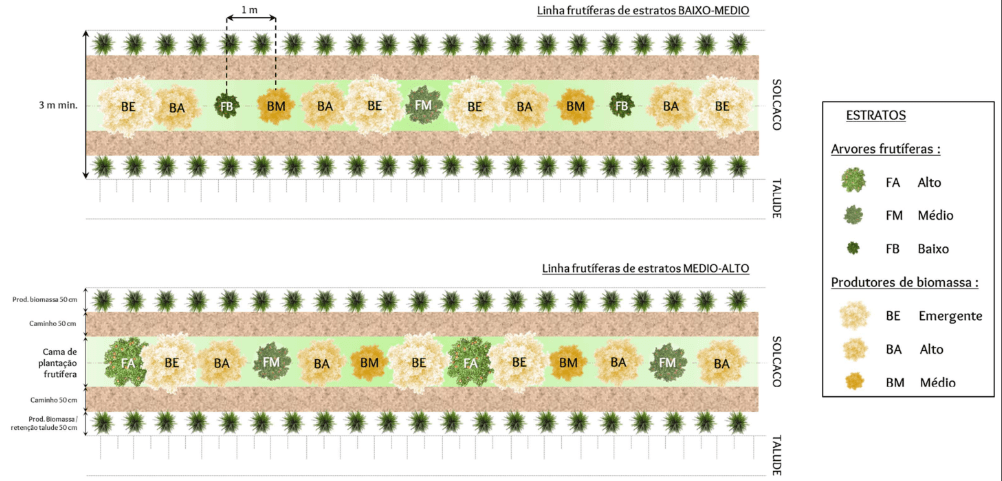
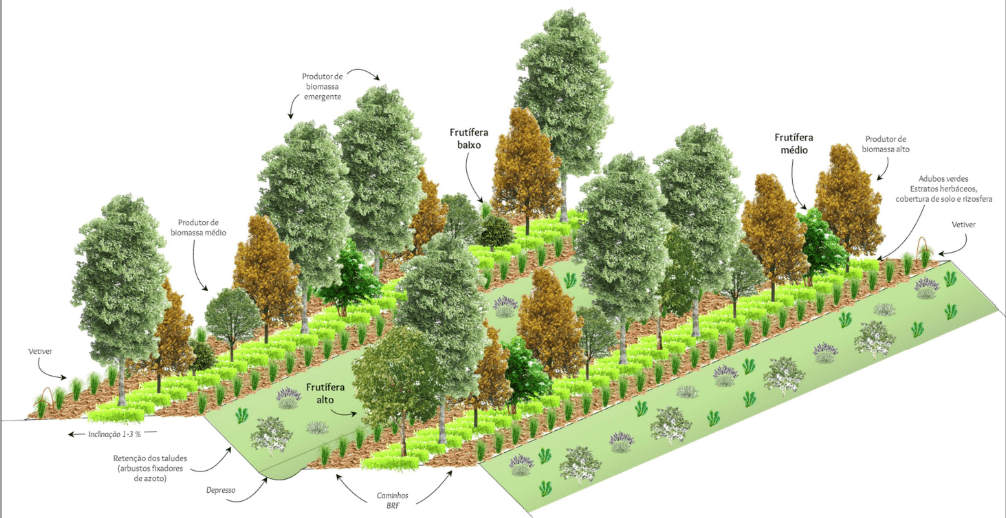
Biomass producing trees intertwined with fruit trees – a symbiosis between both types will result in an abundant forest garden for both humans and animals alike
Our agroforest is shaped by the unique terrain of terraces, slopes, and a riparian zone:
- Terraces:
- Over 30 fruit species and fast-growing biomass plants like platanus and poplars will be planted.
- Diverse herbaceous plants will enhance soil fertility and create abundance.
- Slopes:
- 30+ species of flowering shrubs will slow water flow, reduce erosion, and attract pollinators, forming a pollinator garden.
- Riparian Zone:
- Native trees such as birches, willows, and laurels will protect the waterline and boost ecological balance.
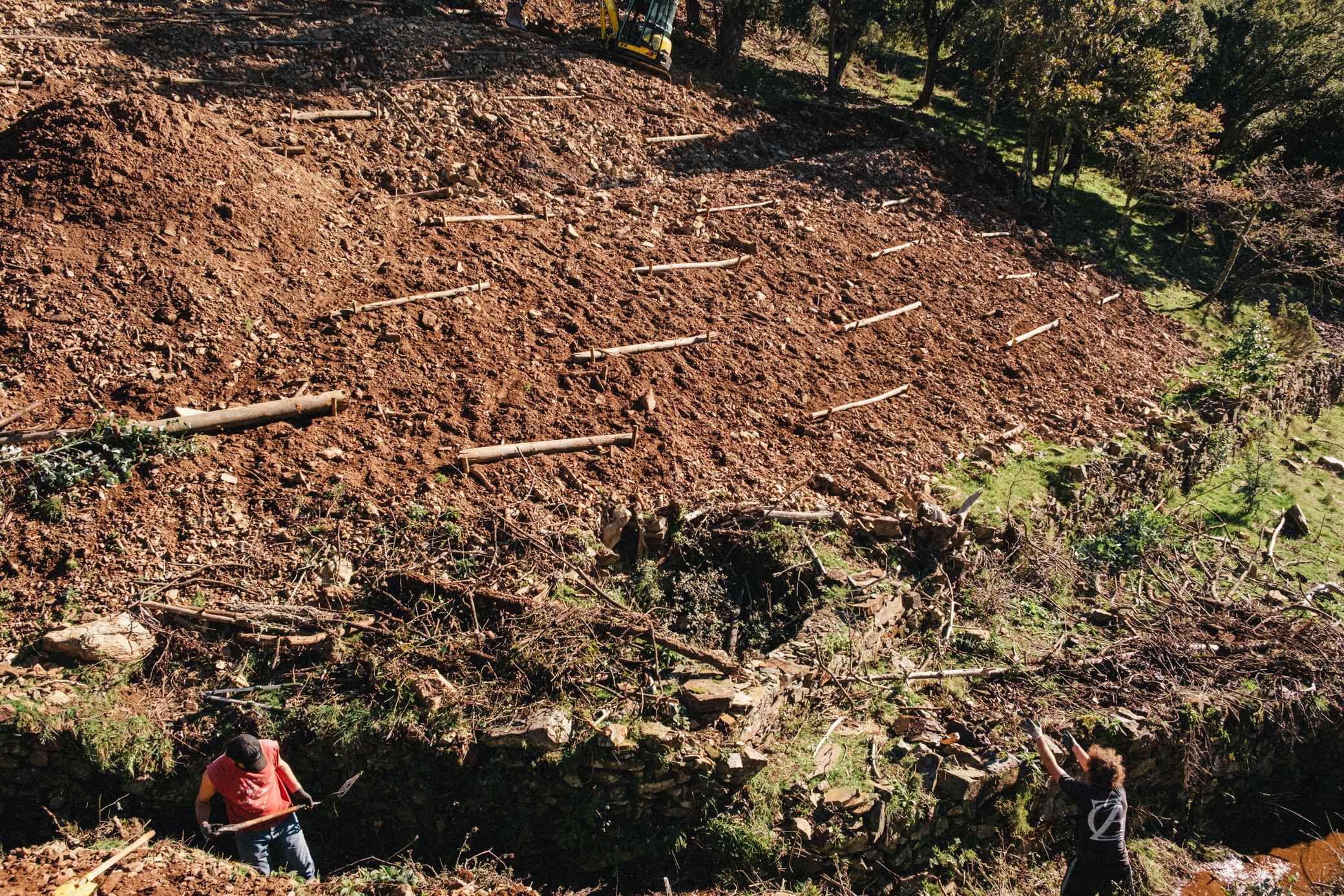
7,000 plants will be introduced across these zones, creating a biodiverse and sustainable ecosystem. Work began in September 2024, with terrace leveling, retention barrier installation using eucalyptus wood, and selective tree removal to respect the ecological balance.
A Vision for the Future
This agroforest is more than a productive space—it’s a community asset. It will support a Farm-to-Table concept, supplying fresh, sustainable produce to the future restaurant in Silveira de Baixo. The public will also be welcome to enjoy its beauty and bounty.
Our commitment to environmental regeneration and sustainable practices drives this project. Follow our journey on the SilveiraTech blog and YouTube channel as we transform this land into a thriving ecosystem!
Frequently Asked Questions
What is syntropic agroforestry?
Syntropic agroforestry is a farming and land restoration approach pioneered by Swiss-Brazilian farmer Ernst Götsch. It mimics natural forest succession; using pioneer species to improve soil conditions for the next succession layer, then managing biomass through strategic pruning to maintain productivity. Unlike conventional farming, no external inputs (fertilisers, pesticides, irrigation beyond establishment) are needed once the system matures. The result is a productive, self-sustaining forest garden.
How is syntropic agroforestry different from permaculture?
Both approaches work with natural systems rather than against them, but syntropic agroforestry has a more specific and active management framework: it requires regular cutting and pruning to accelerate succession and manage light. Permaculture is a broader design philosophy that encompasses many techniques, of which syntropic agroforestry can be one. Ernst Götsch’s system is distinct in its emphasis on succession as the primary management tool.
What will the Silveira agroforest produce?
The terraced agroforest will eventually produce fruit from 30+ species, biomass from fast-growing trees like platanus and poplar, and a diverse array of herbaceous plants, vegetables, and medicinal species. The riparian zone will support native trees such as birch, willow, and laurel. Long-term, the produce will supply a farm-to-table restaurant planned for Silveira de Baixo village.
How do you convert a eucalyptus monoculture into an agroforest?
The conversion process begins with selective tree removal — not clear-cutting, but strategic felling that opens the canopy without destabilising the soil. Eucalyptus stumps are typically treated to prevent regrowth. Terraces are re-levelled, retention barriers built from available timber, and pioneer species planted first to begin soil improvement. The entire process at Silveira involved 7,000 plants across terraces, slopes, and a riparian zone.
Follow Our Journey on YouTube!
Stay updated with the progress of our Syntropic Agroforestry Project and other regenerative initiatives by subscribing to our SilveiraTech YouTube channel. Watch behind-the-scenes VLOGs showcasing how we’re transforming the land, rebuilding ecosystems, and creating a sustainable future.
👉 Subscribe now and join us in building a resilient future!
08/05/2026
More than 120 Hectares: Hardship and Victory on the Mountain
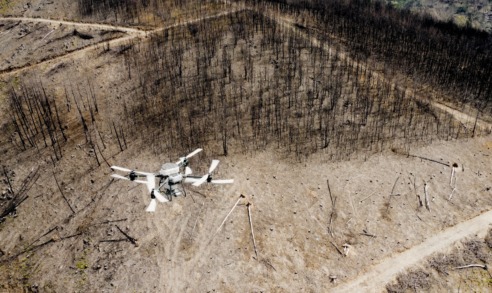
Taking on the Agras T50, our seeding drone, for the first time, while simultaneously covering more than a hundred hectares of charred, uneven ground, was an ambitious undertaking.

23/03/2026
How Drones are Transforming Regeneration
08/10/2025
From a Humble Storage to an Off-Grid Basecamp
Learn how we work off-grid as well as the challenges and benefits this way of life brings!